
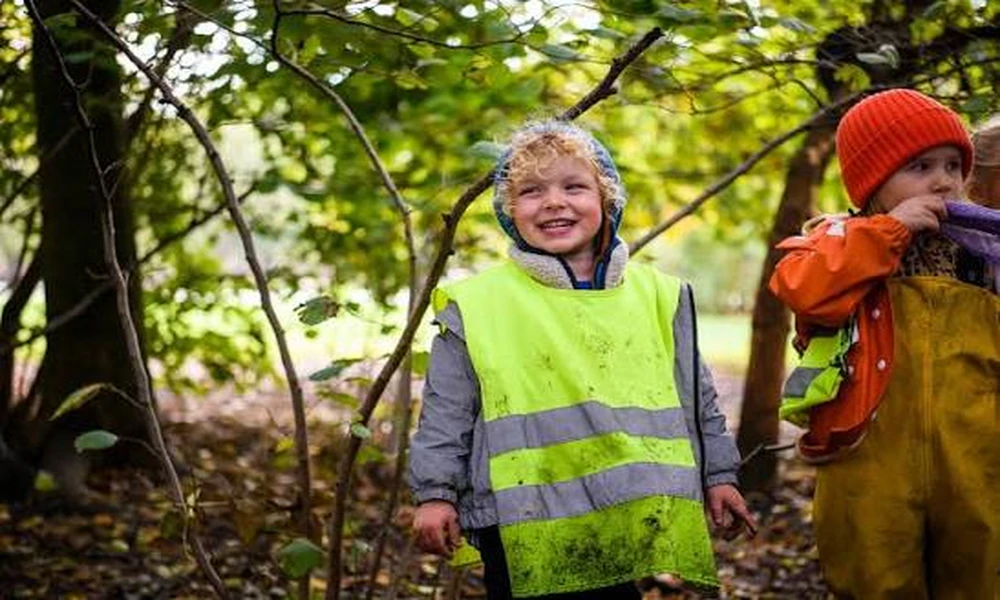
Ask most London parents about their own childhood and you will hear stories of climbing trees, building dens and coming home covered in mud. For many children growing up in the city today, those experiences are harder to come by. Small flats, busy roads and packed schedules mean time in nature often has to be planned rather than stumbled upon. That is one reason Forest School has become so popular in early years education, and why more nurseries are making it part of the weekly routine.
What Is Forest School?
Forest School is an outdoor learning approach that began in Scandinavia and has grown steadily across the UK. Sessions take place regularly in a natural space, such as woodland or a park, and are led by a trained Forest School practitioner. Rather than following a rigid lesson plan, children are encouraged to explore, ask questions and take the lead in their own play. Activities might include searching for minibeasts, collecting leaves to compare shapes and colours, building small shelters or simply splashing through puddles.
The key ingredient is regularity. A one off trip to the park is lovely, but returning to the same space week after week lets children notice the seasons changing, grow familiar with their surroundings and gradually take on bigger challenges.
The Benefits for Young Children
Physical development. Uneven ground, fallen logs and open space naturally build balance, coordination and strength. Children run, climb, crouch and carry in ways that develop both large and fine motor skills.
Confidence and resilience. Forest School introduces carefully supported, age appropriate risk. Balancing on a log or working out how to cross a muddy patch teaches children to assess situations and trust their own abilities. Each small success builds self belief.
Language and communication. Nature is endlessly interesting to young children, and that curiosity sparks conversation. Describing textures, sounds and creatures helps vocabulary grow quickly, often in a more relaxed way than indoor activities allow.
Social skills. Many Forest School tasks work best as a team. Carrying a large branch or building a den requires sharing ideas, taking turns and solving problems together.
Wellbeing. Time outdoors is widely linked with calmer moods and better concentration. Children often return from sessions happy, tired and ready to settle.
Bringing Forest School to the Heart of London
You might assume Forest School requires acres of countryside, but London’s green spaces offer wonderful opportunities. Kensington Kindergarten is a good example. This Ofsted Outstanding nursery and pre school in Kensington Square takes its children to the beautiful Kensington Gardens each week for Forest School classes led by its trained Forest School teacher. Combined with its own garden, soft playroom and sensory room, it means children aged two to five at Kensington Kindergarten enjoy a genuinely well rounded experience every day, without ever leaving the neighbourhood.
How Parents Can Support Outdoor Learning at Home
You do not need a dedicated programme to bring some of the Forest School spirit into family life:
- Dress for the weather, not against it. Waterproofs and wellies turn a rainy afternoon into an adventure.
- Slow down. Let your child set the pace on walks and stop to look at whatever catches their eye.
- Ask open questions. Try “What do you notice?” or “What do you think lives here?” instead of giving answers straight away.
- Return to the same spot. Visit a favourite tree or pond across the year and talk about how it changes.
- Allow a little mess. Muddy knees are a sign of learning.
Final Thoughts
Forest School gives city children something precious: regular, meaningful time in nature at the age when it matters most. When choosing a nursery, ask whether outdoor learning is part of the weekly routine. Your child’s confidence, curiosity and wellbeing will thank you for it.
